
 Historical Swords
 Norse & Viking Swords
 Templar Swords
 Claymore Swords
 Fantasy Swords
 Chainmail
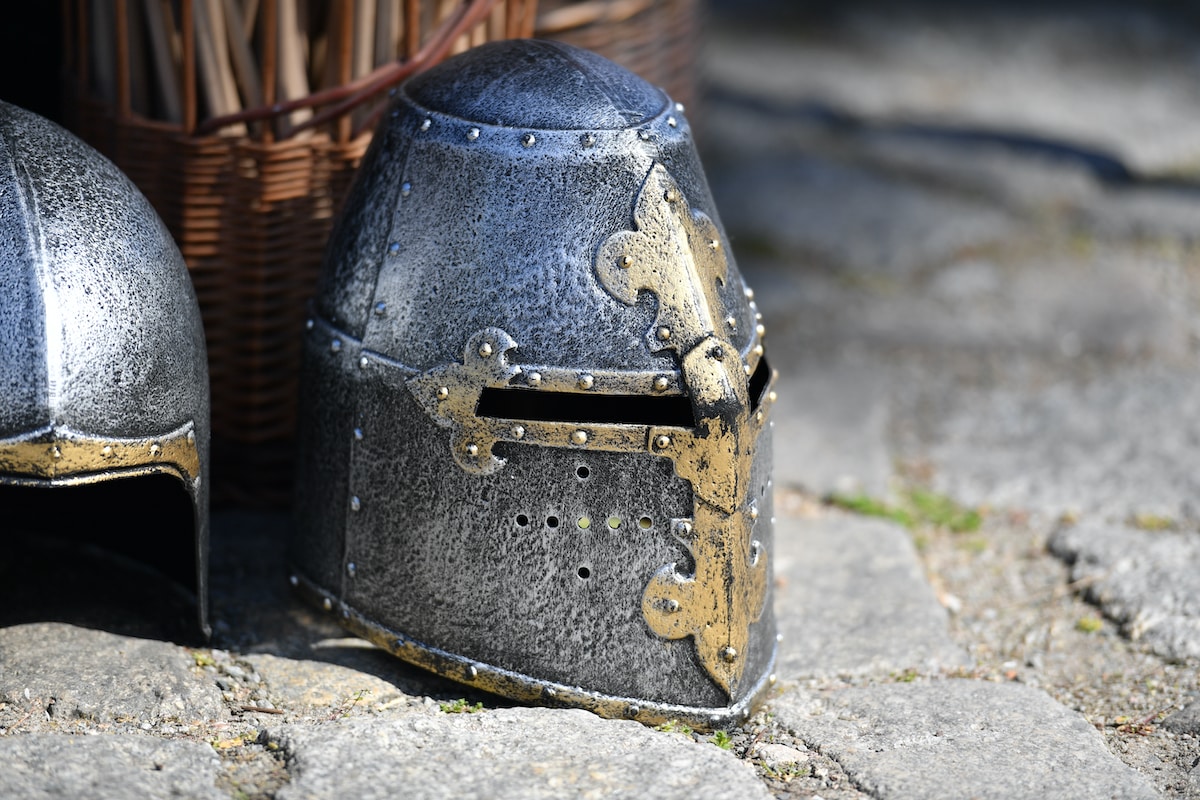 Helmets
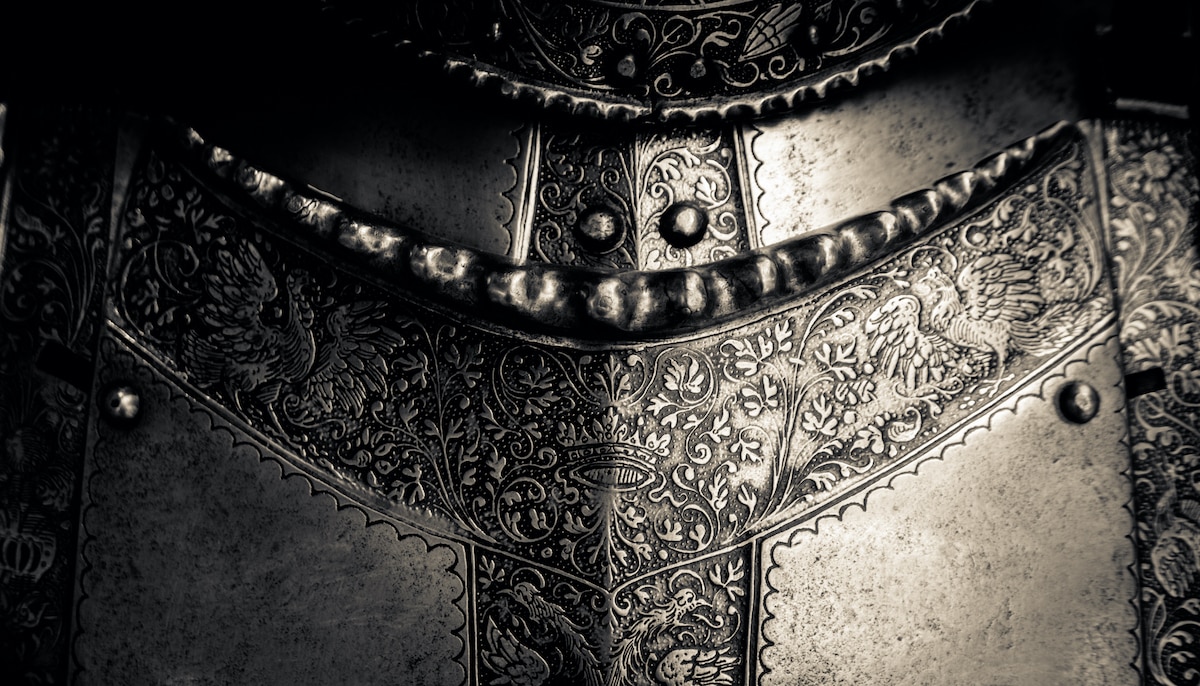 Torso Armor
 Bracers and Arm Protection
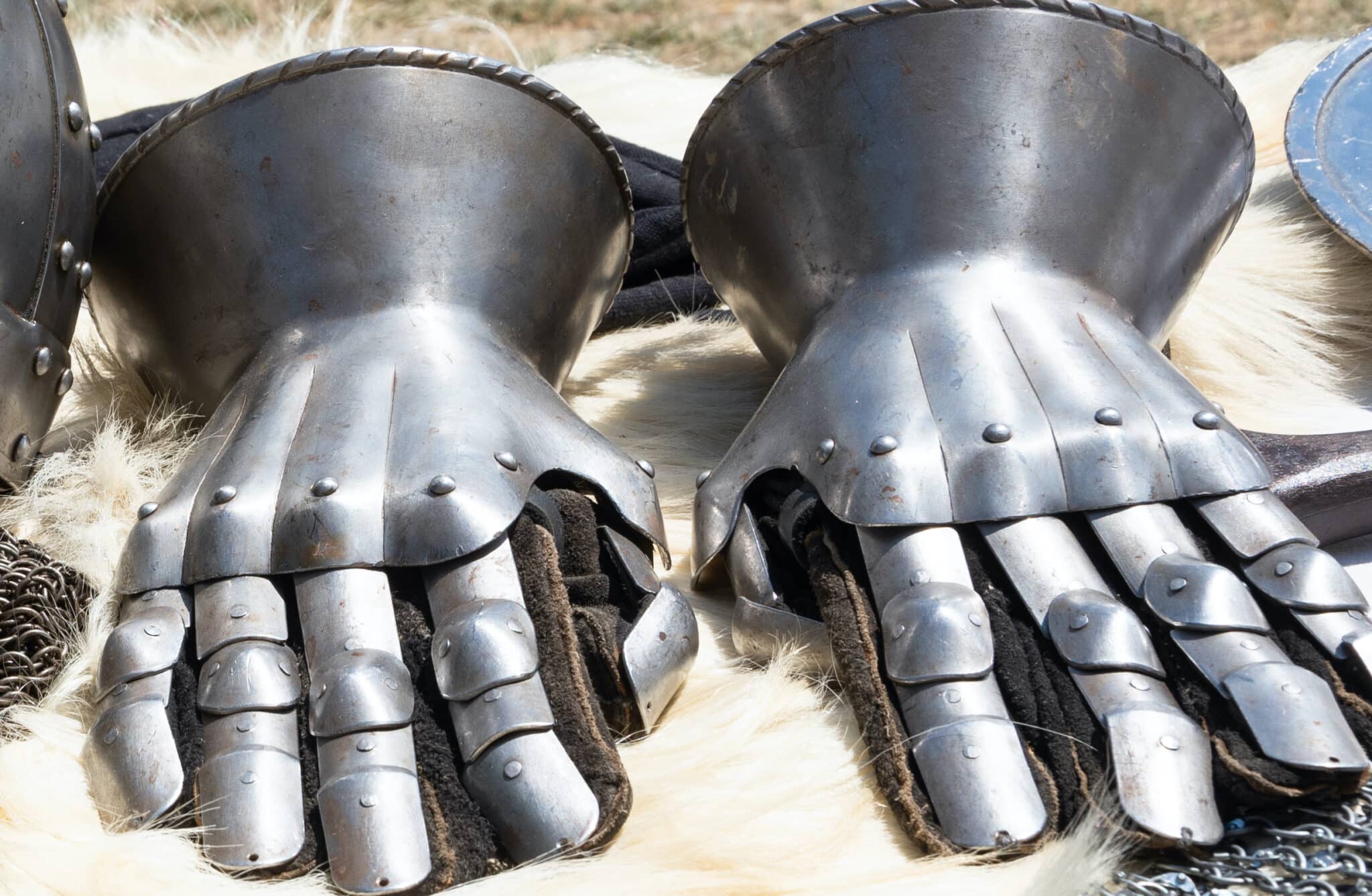 Gauntlets
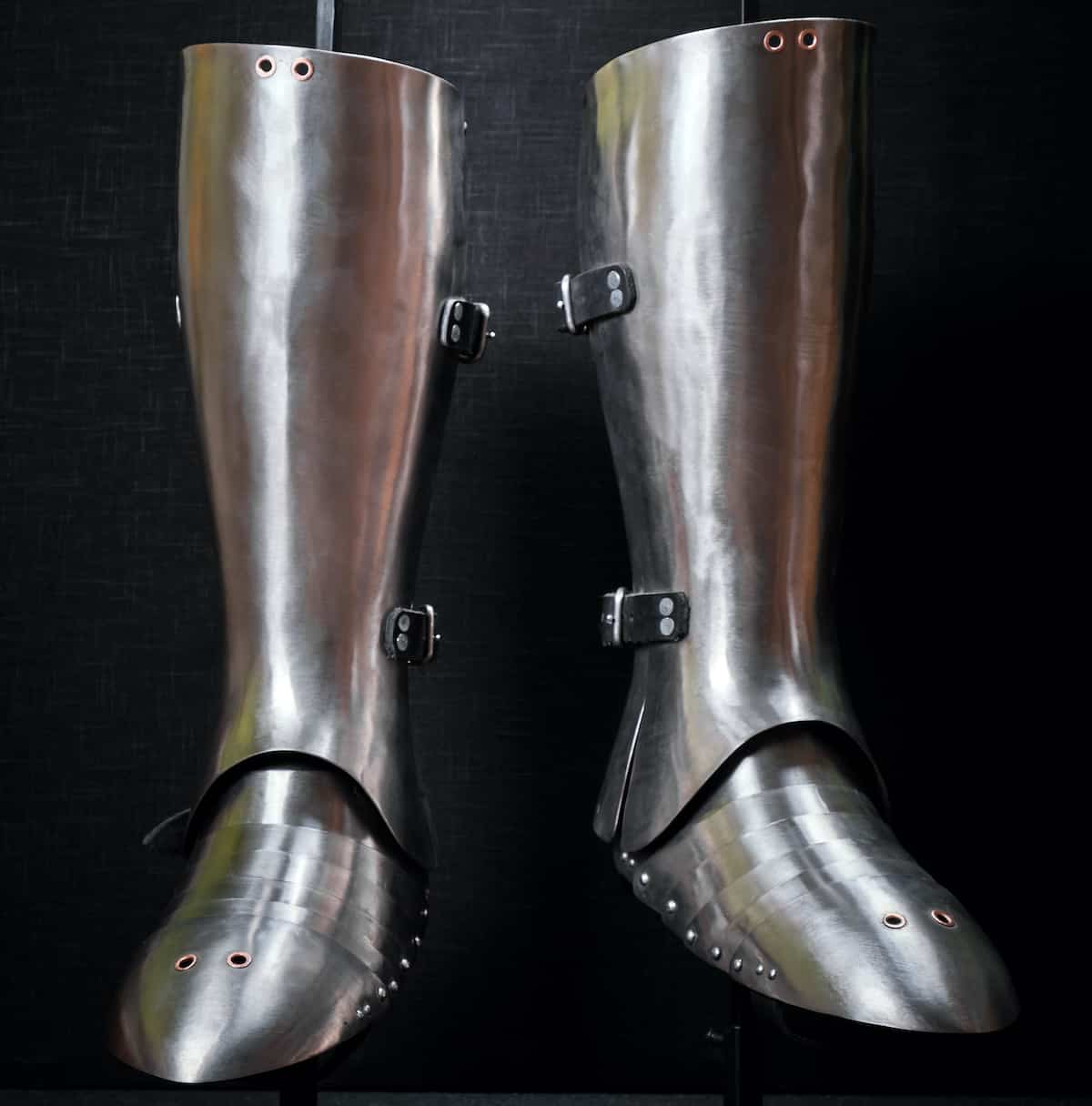 Leg Armor
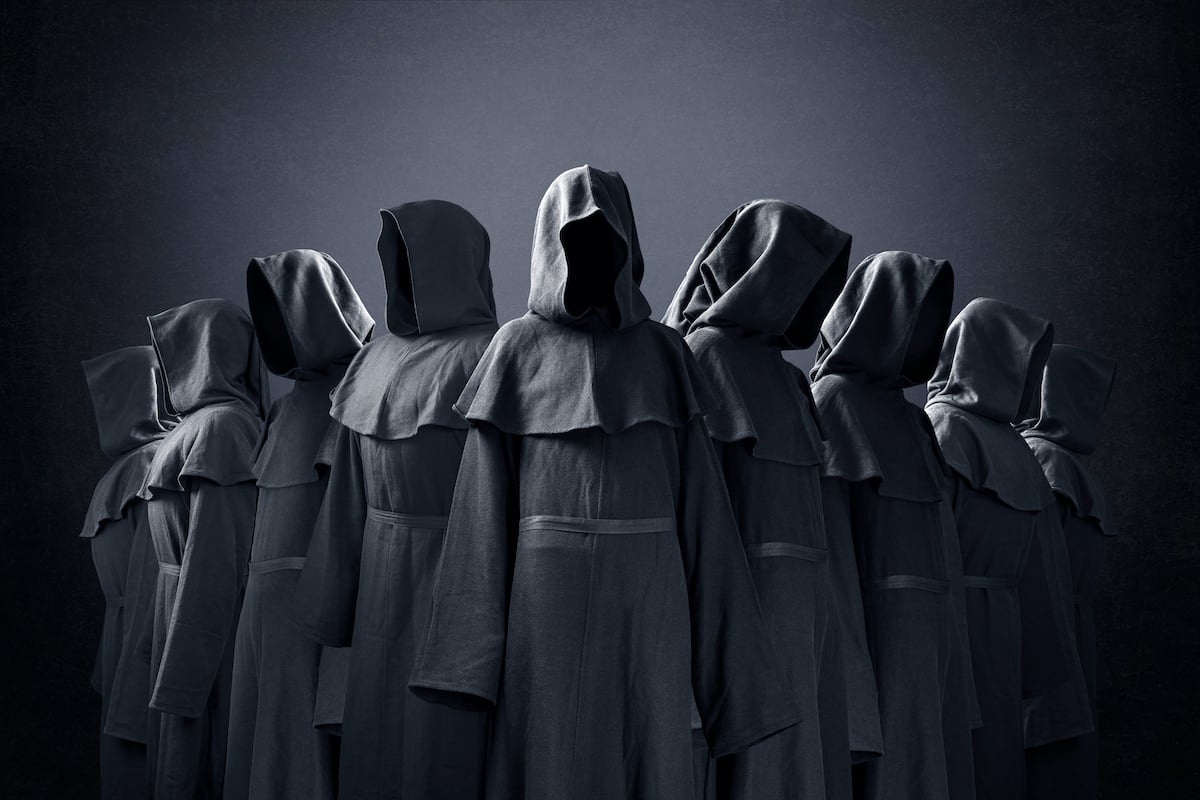 Cloaks
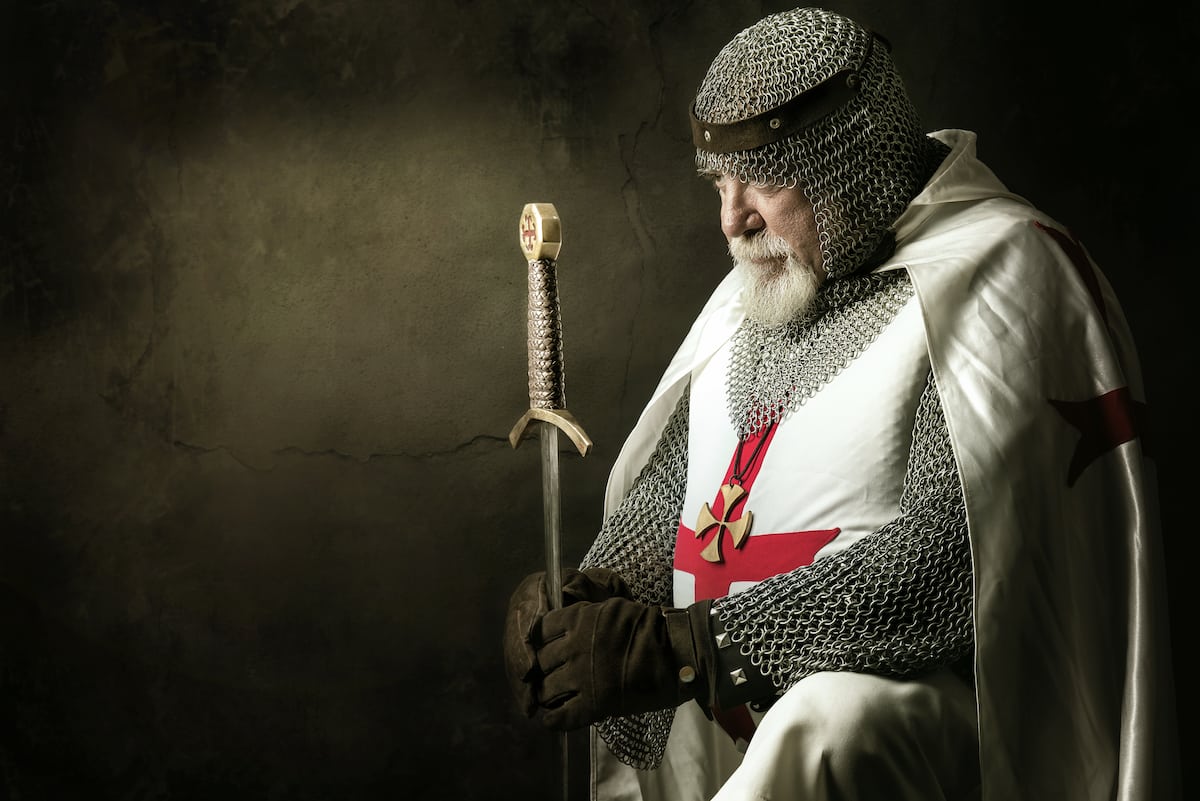 Tabards
 Shirts
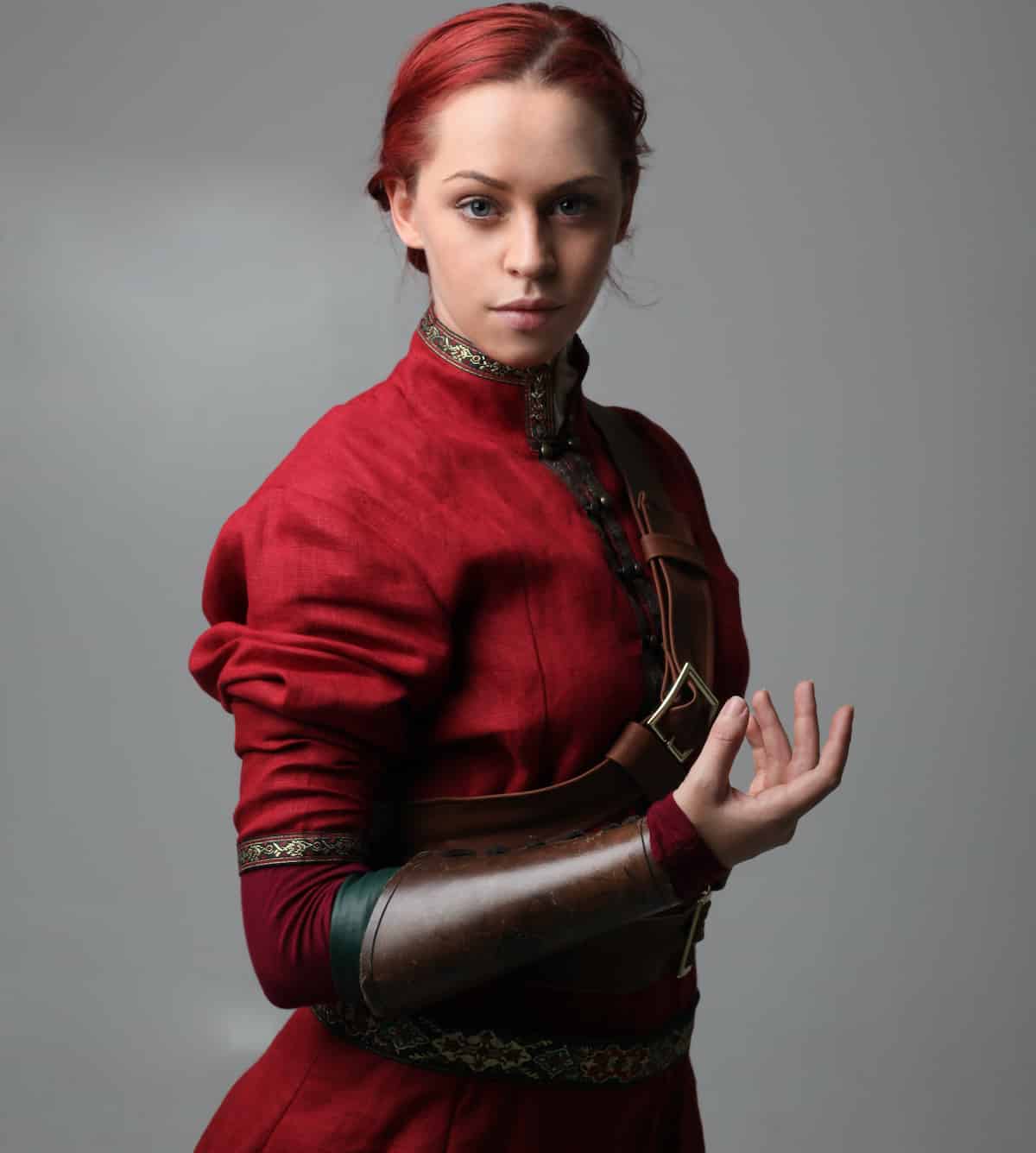 Tunics
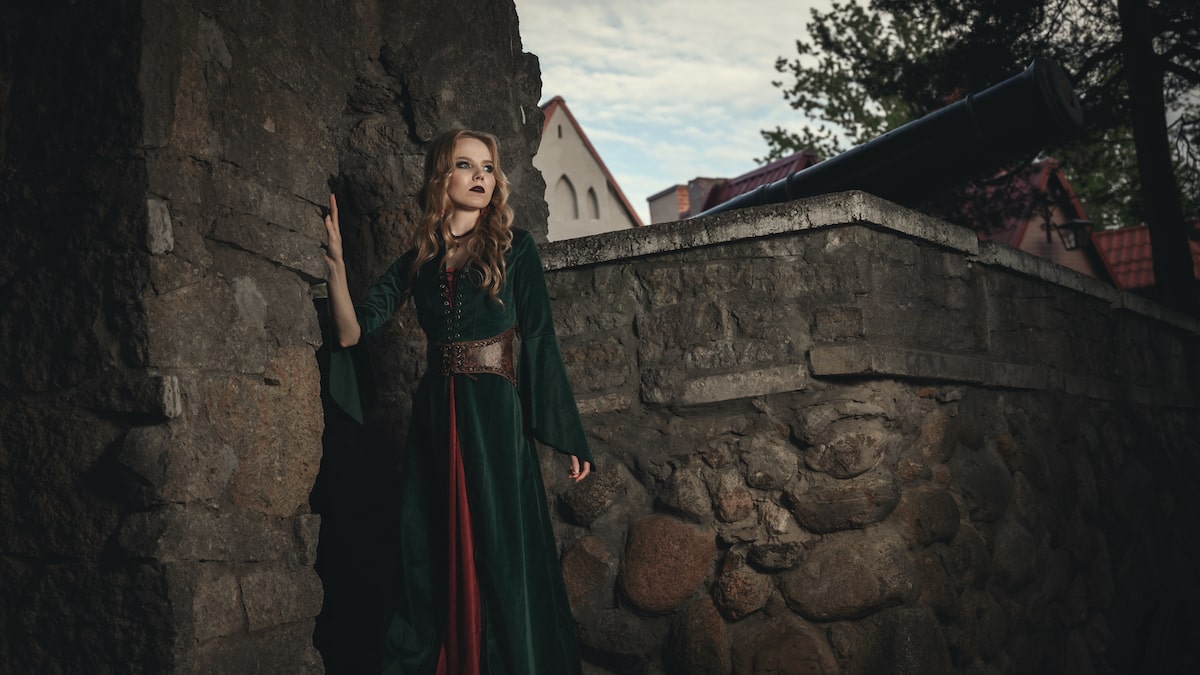 Dresses
 Pants
Pants Gloves
 Belts
Belts Shoes
Shoes
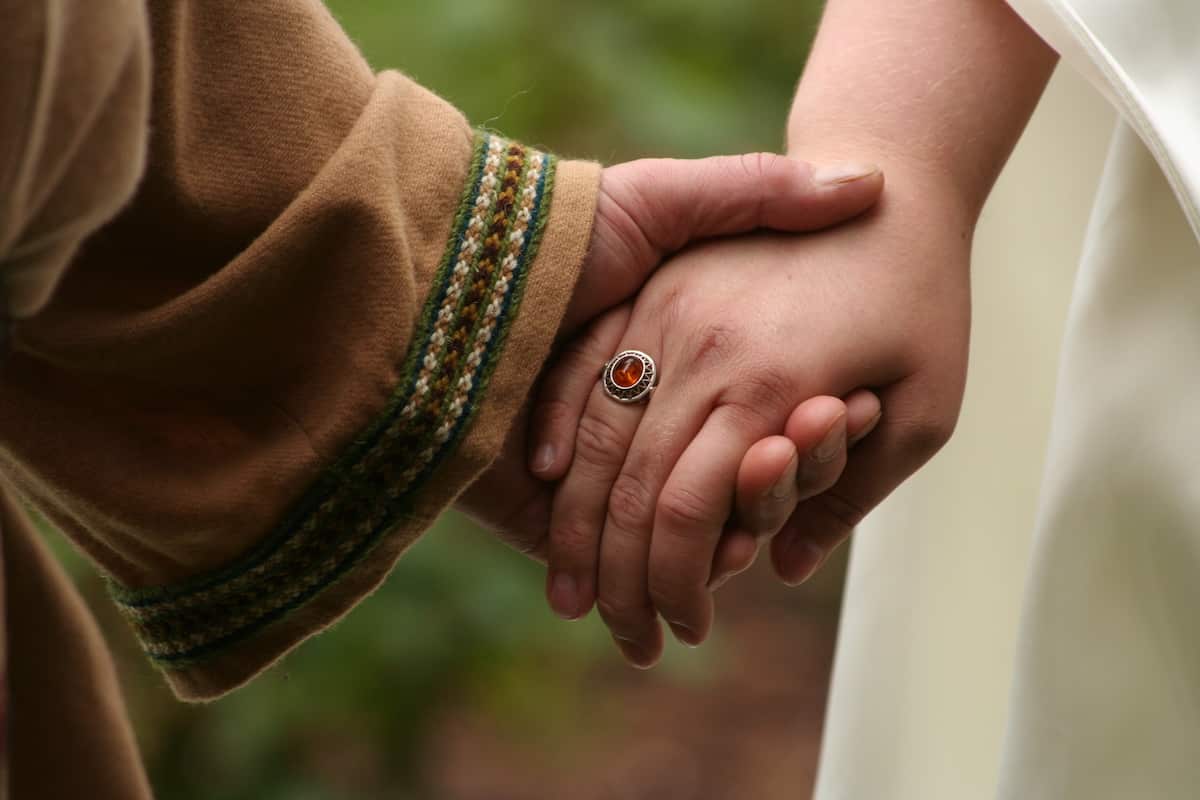 Rings
Rings Necklaces & Pendants
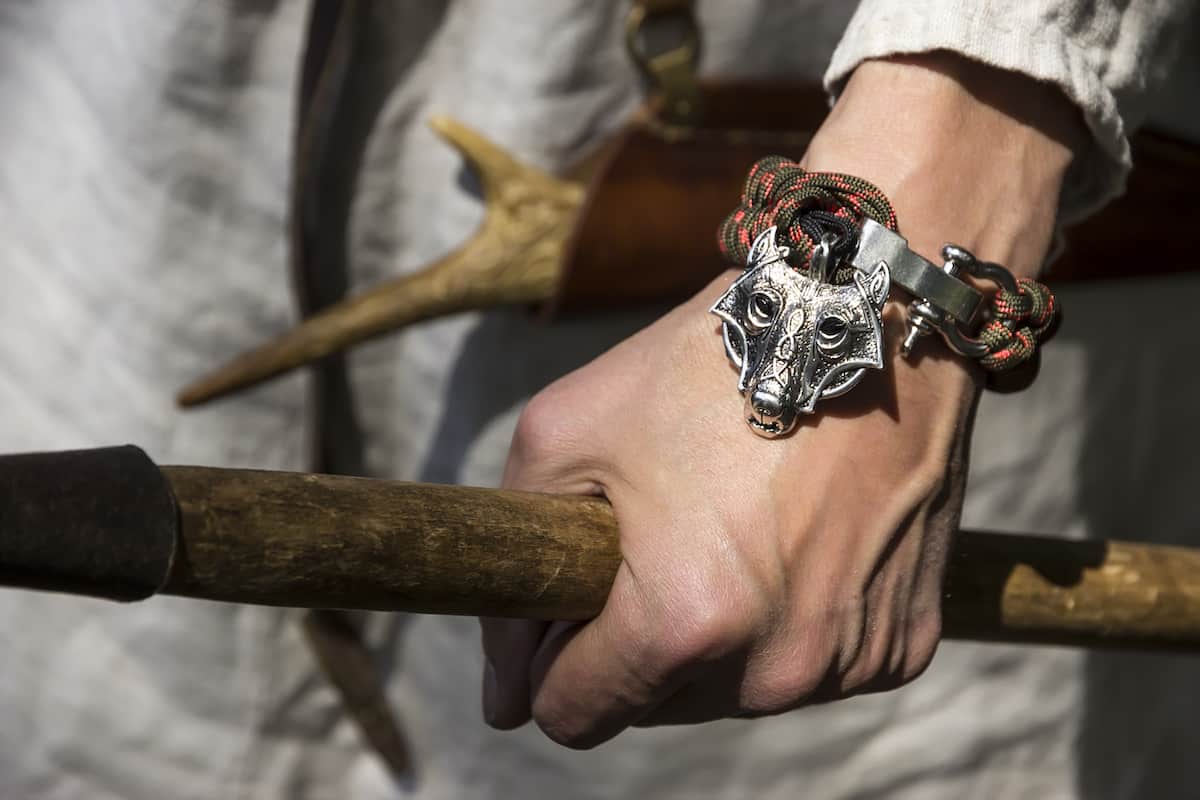 Bracelets

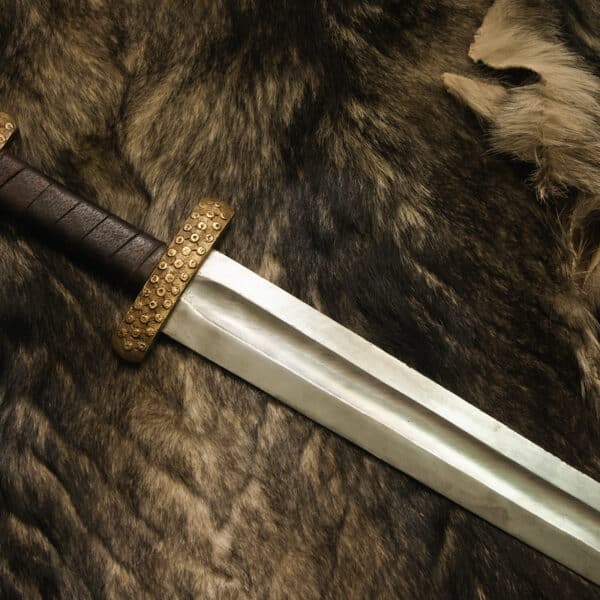


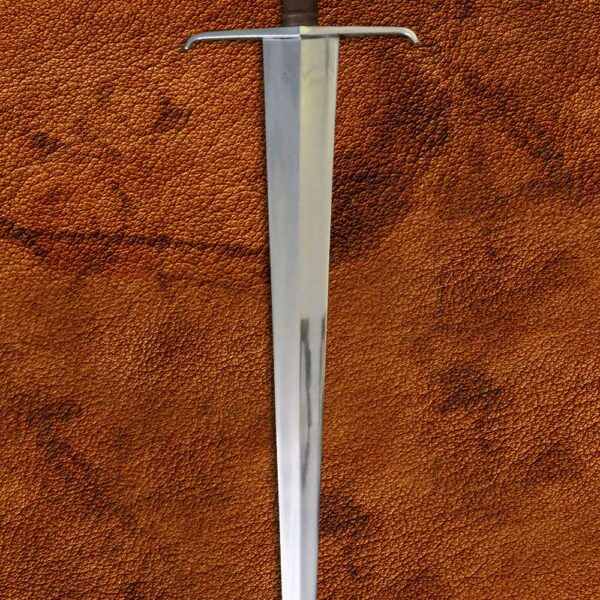


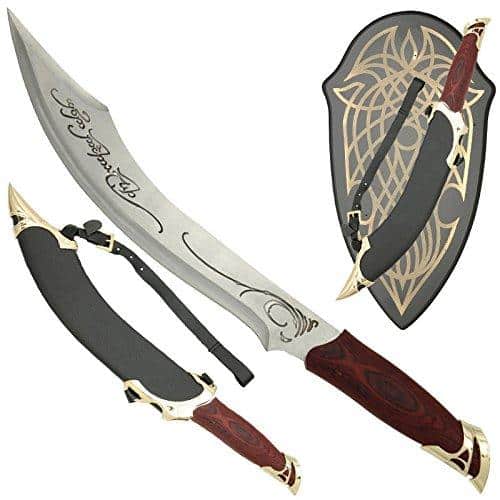
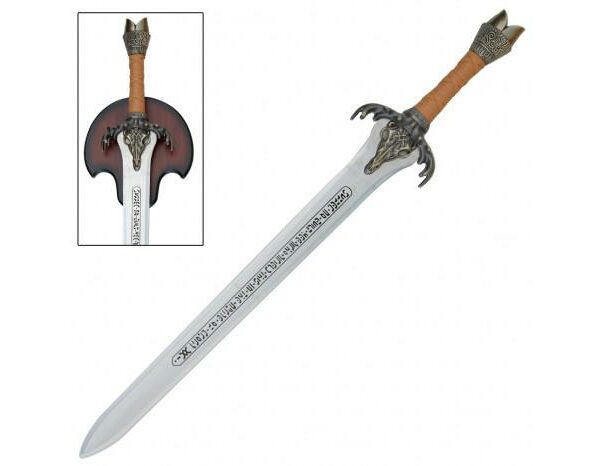
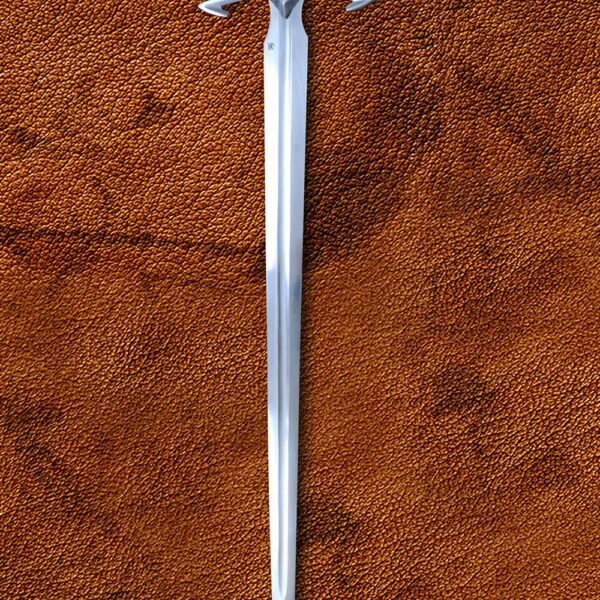
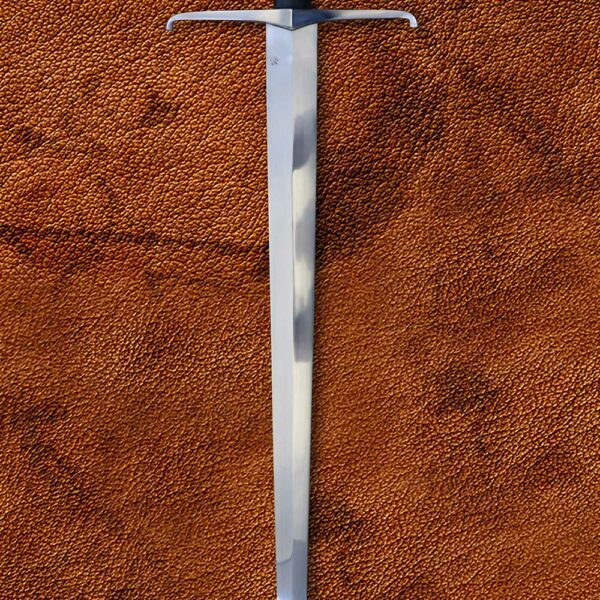
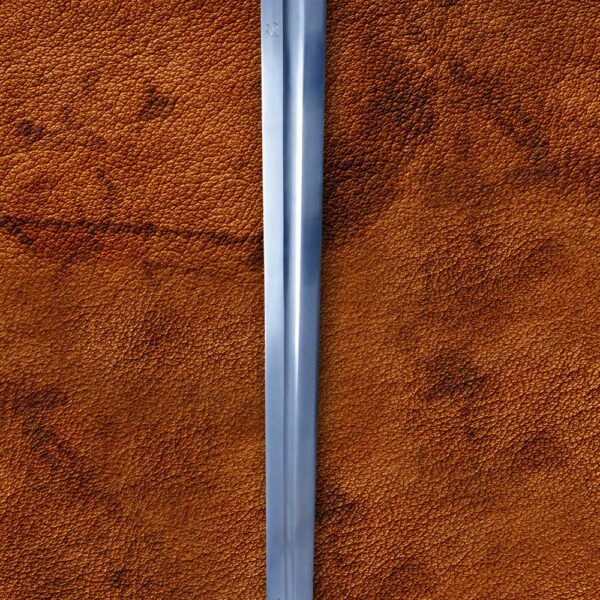
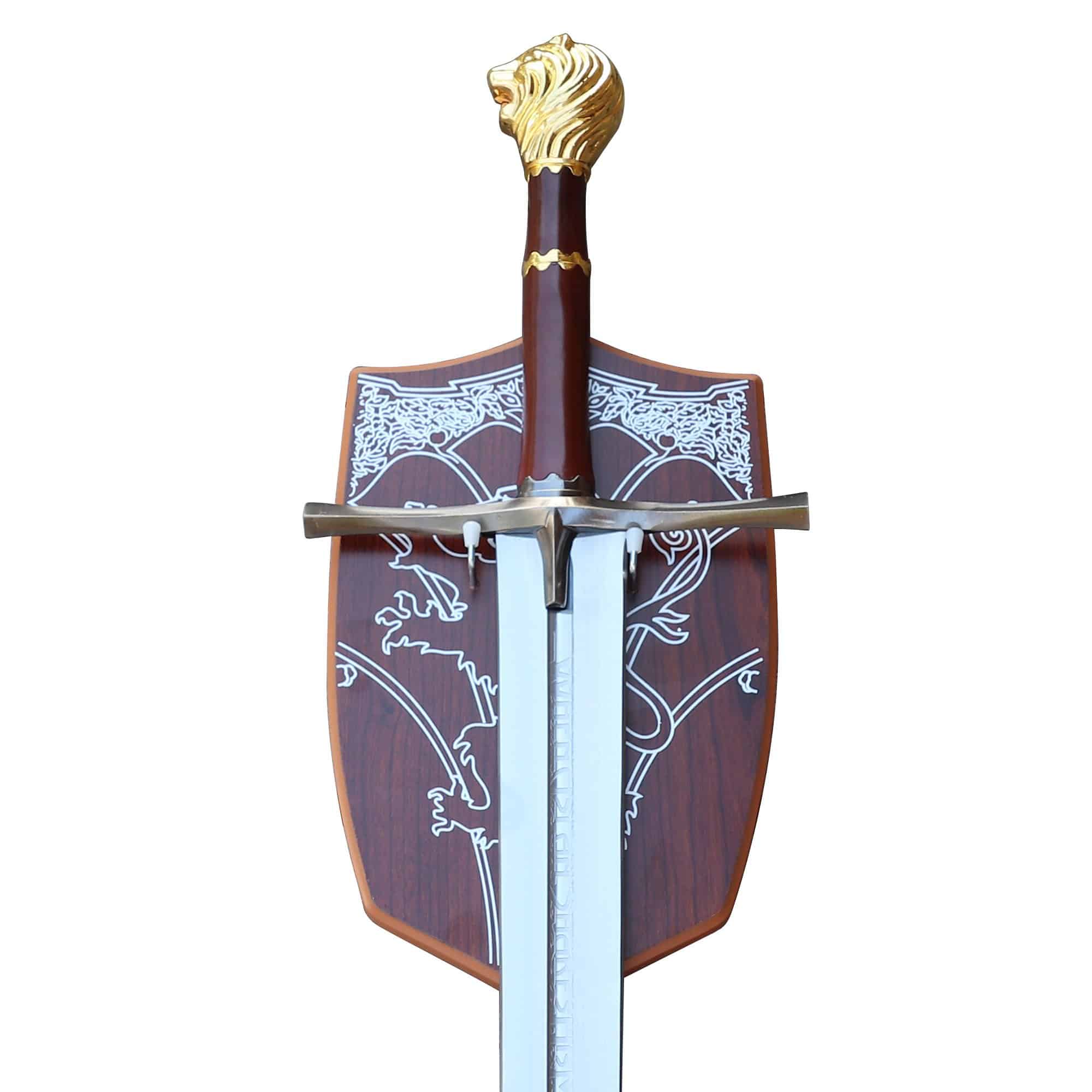
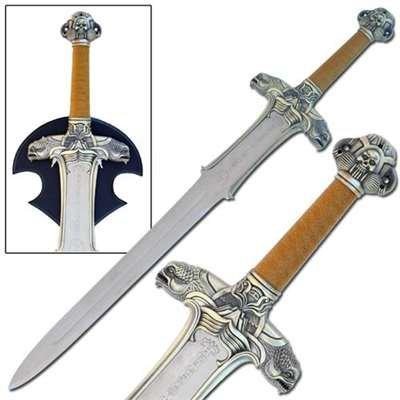
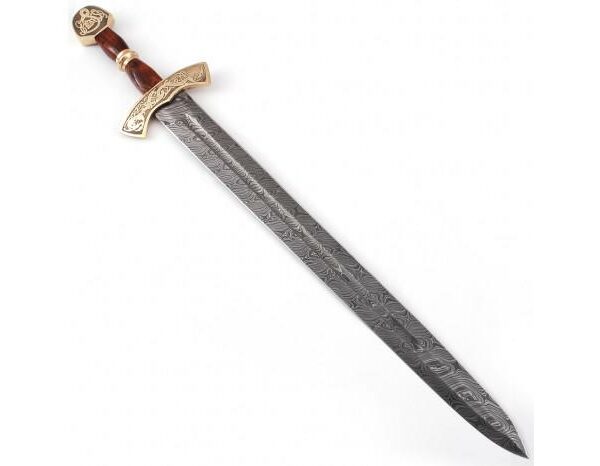
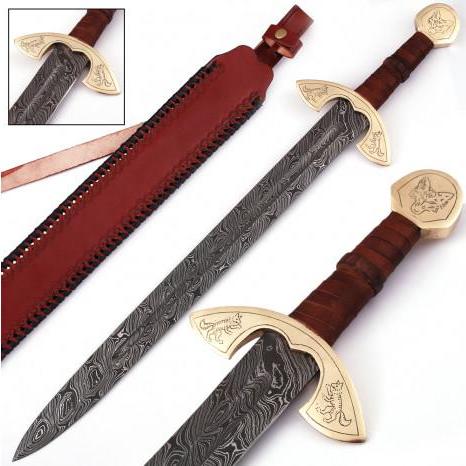
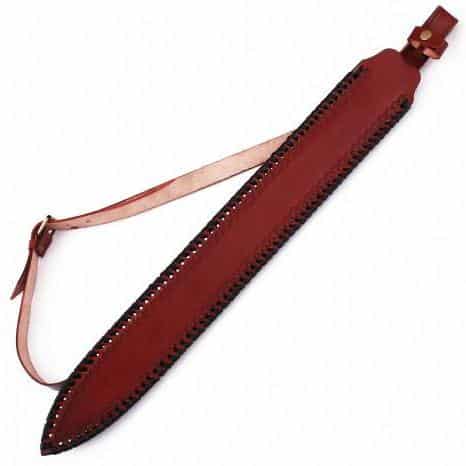
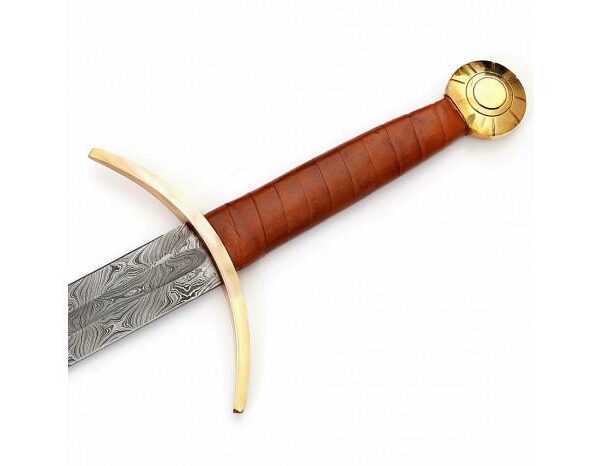
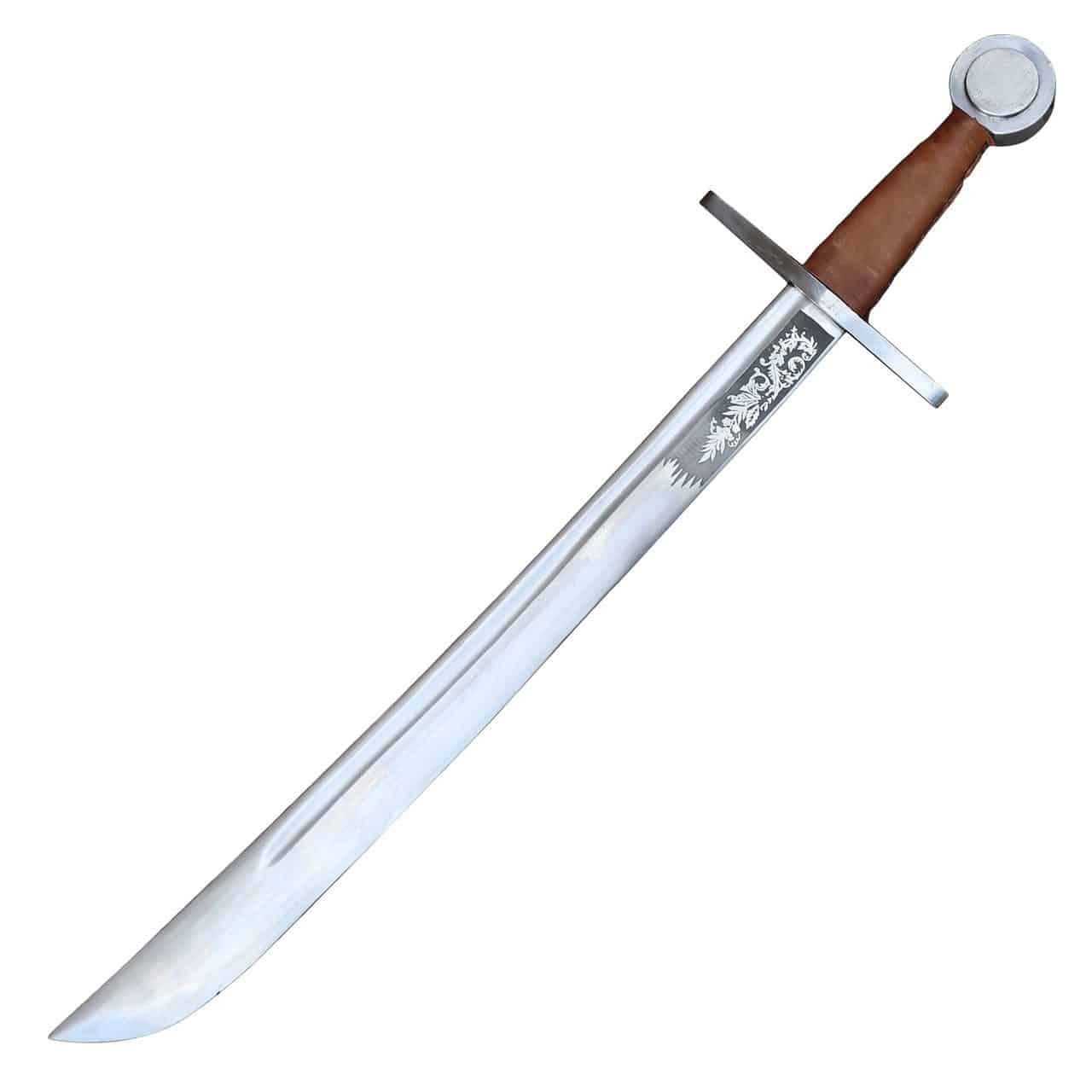

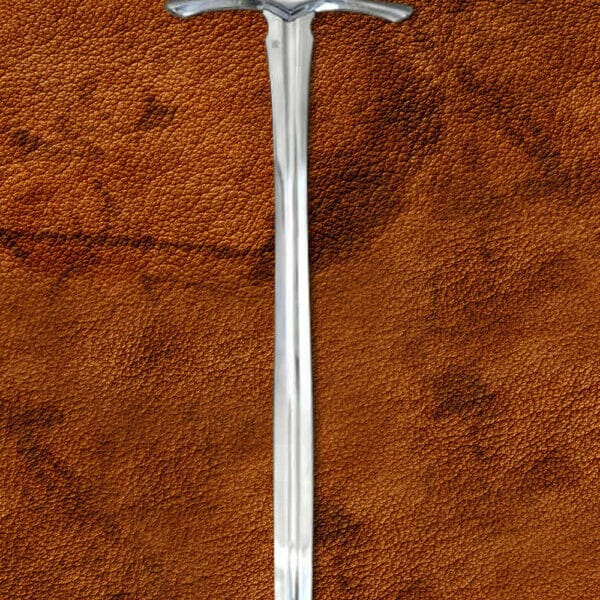
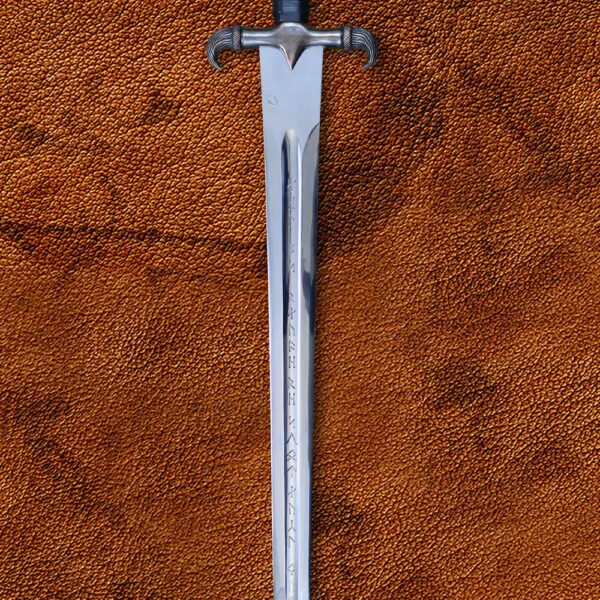

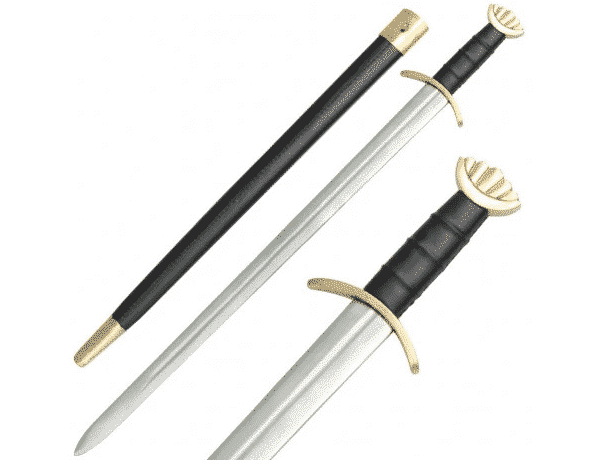
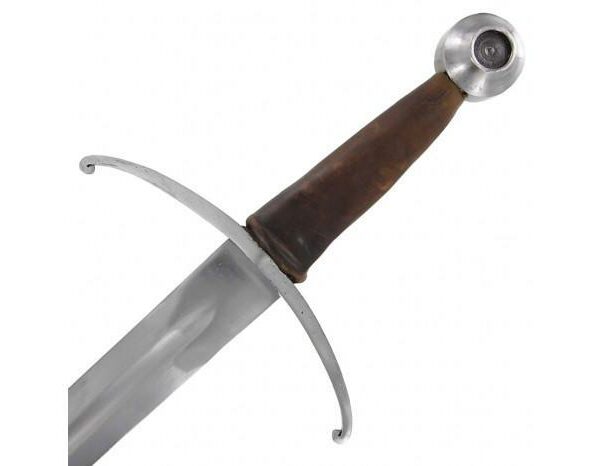
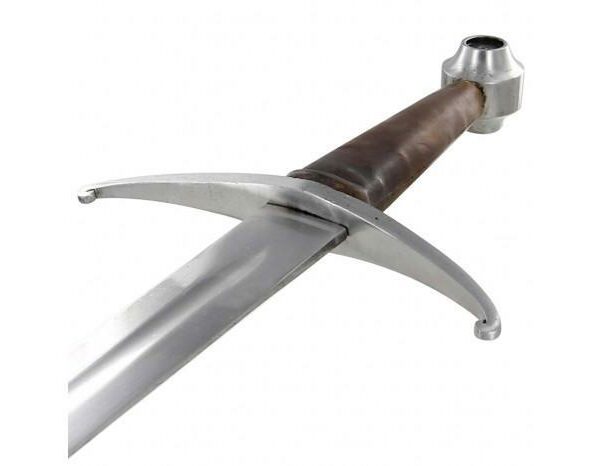
The sword is a complex and hard-to-manufacture weapon, demanding the highest skills of a weaponsmith. It is a complex symbol: the ultimate embodiment of knightly virtue, and a brutal symbol of cultural supremacy; a tool to confer the divine right of kings, and the weapon of a rebellious Frisian peasant. Real medieval swords were overlaid with all of these ideas simultaneously, and there is no better reason to browse the medieval swords for sale here and dive into the rich history of the medieval sword below.
The Prehistory of Medieval Sword
Swords begin to appear in the European context around the dawn of the Bronze Age, around 5,000 years ago. Although there is always dispute and debate around the topic, it is widely agreed that the ‘oldest’ swords yet discovered are the brace of 3rd-millenium BCE shortswords unearthed by the magnificently named Italian academic Marcella Frangipane in 1966 at the ancient Mesopotamian city of Arlsantepe (now Malatya, in modern-day Turkey). These swords are cast (as opposed to forged with a hammer and anvil) from arsenical bronze, a copper-arsenic alloy that would have been highly toxic to the metalworkers producing it. Several of them are gorgeously inlaid with silver – Zelda fans will notice the ‘Triforce’ symbol on the hilt, which was taken from Mesopotamian art. The Melit swords are made from a single piece, of bronze, without any sign of a wooden hand grip; there is some speculation that the swords might have had a simple leather hilt wrap. However, there was no evidence of this found in situ, and reproductions (made from less toxic metals) have shown that they were pretty unwieldy and uncomfortable to use. Clearly, sword design had some way to go.
Sword-making began to increase in complexity with the advent of iron forging in the Middle East – see for example, the akinakai created by the Scythians and later adopted by the Classical Greeks, which had an… ahem… ‘kidney shaped’ crossguard, like our old friend the medieval ballock dagger. Blacksmithing with iron became an art, and gradually replaced cast-bronze, which produced brittle weaponry. Celtic smiths in the 1st-millenium BCE were prolific with their experimentation in sword-making, and they pioneered ‘piling’: making a sword blade from multiple different types and grades of iron welded together; softer iron for the core of the blade to give flex and resilience, with harder iron capable of keeping sharper on the edges. The Greek historian Polybius was dismissive of Celtic swords, saying that:
“only the first cut takes effect; after this they at once assume the shape of a [back-scratcher], being so much bent both length-wise and side-wise that unless the men are given leisure to rest them on the ground and set them straight with the foot”
But Polybius is likely indulging in Hellenic-supremacy: around two-thirds of Celtic swords that we have discovered would have been functional, resilient weapons capable of heavy battlefield use. Perhaps Polybius is taking license from the Celtic practise of ‘killing’ the swords of the defeated by bending them in half – or maybe that particular group of Celts’ blacksmith really just phoned it in that day.
Types of Medieval Swords
The sword travels a long and varied morphological path through the medieval period, from the post-Roman spatha to the German Zweihander. We’ll chart a rough path through the past, visiting each category of sword as we pass by.
Spathae
The Roman Republic and later Empire used two primary swords, both inextricably interwoven with the society, culture and military tactics they used. We have frustratingly few surviving examples of either the gladius shortsword, and the long spatha, but very broadly we can chart the evolution of Roman swords from the shorter to the longer, in tandem with the ‘barbarianisation’ of the Roman military, and its increasing use of cavalry. It is the spatha that is the direct ancenstor of almost all medieval swords.
There is a strong argument that the Romans were so successful because they shamelessly stole cultural and military innovations from their neighbours, and merely applied them on a larger scale. Celtic chainmail is one example, and the gladius was another: the short, straight-sided blade was originally the sword of ancient Iberians, whose weaponry the Roman military adopted when they acquired eastern Iberia during the Second Punic War (c. 215 BCE). It was the quintissential Roman weapon: simplified for mass-production by Roman smiths with a simple wooden hilt formed on a lathe, it was almost always used to stab at the enemy from close-range in tight formations equipped with the large square scutum shield. Surviving gladii vary significantly in quality: some are little better than sticks of wrought iron, whilst some associated with high-status individuals are made from complex piling incorporating high-quality steel and quenching techniques to produce weapons as good as any that will be seen before the Early Modern period. By the late Roman period, smiths had all that they needed to create complex and effective medieval swords.
The spatha, meaning ‘an oar or flat blade’ (associated with our own words ‘spade’ and ‘spatula’), broadly came to replace the gladius as a frontline heavy-infantry weapon in late Antiquity. Like the gladius, most surviving examples and artistic depictions show a simple mass-produced weapon consisting of a tanged iron or steel blade attached to a simple turned hilt. What distinguishes it from a gladius is its length: gladii blades were only around 50cm in length, whilst spathae blades ranged from 75cm to 1m. Although the exact lineage of Roman weaponry is hard to pinpoint due to the small number of surviving weapons, it seems intuitively likely that this change in hardware is inextricably related to the changes taking place in the organisation of Roman military society. More and more ‘barbarians’ were employed by Roman administrators as limitanii (border troops), and the sheer scale of the Empire required more mobile forces, hence more cavalry. So – the Celtic warriors with their long swords and fighting styles adapted to horseback fighting, skirmishing and open combat rather than close-formation fighting, and so the spatha gradually relegated the gladius to the weaponry of light infantry and scouts.
It is on late-Roman spathae that we see examples of pattern welding. This is a metalworking technique that produces beautiful geometric variations in colour on the surface of the blade, as well as making the blade stronger and more resilient. It has captured the desires of weaponmakers and sword-collectors ever since. Modern reproductions will often refer to pattern-welded blades as ‘Damascus steel’ – this is a bit cheeky, as true Damascus steel resulted from early crucible steel-making in Southern India during the high Medieval period, rather than pattern-welding. But they’re ruddy gorgeous regardless.
Viking Age Swords
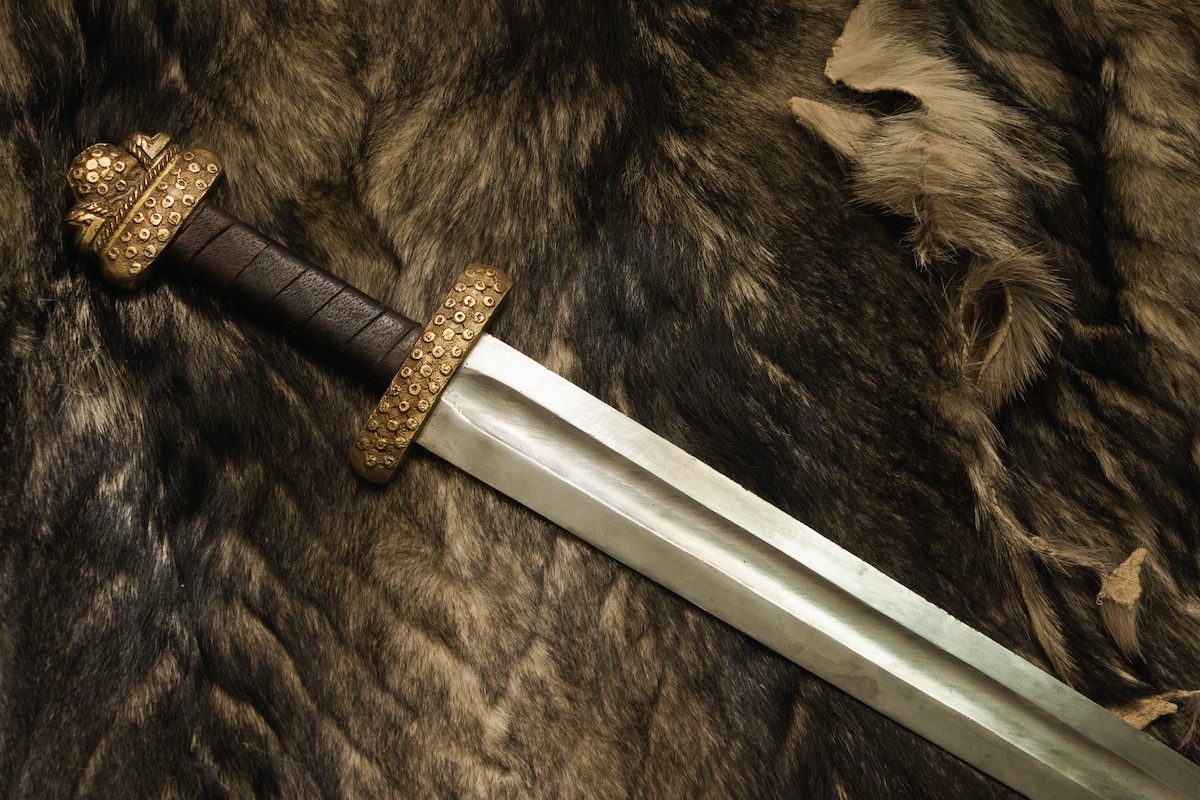
We don’t think of the Vikings as inheritors of Rome, but in terms of military hardware, they might be the culture who continued the traditions of late Antiquity for longest: recognisably Roman chainmail, helmet design and swords were all used by the Viking into the high Medieval period. The medieval swords used by the Vikings were the direct descendant of the Roman longsword or spatha. The ‘Viking sword’ was effectively a Roman spatha in construction, with a slight narrowing and thinning towards the tip, finished by a flat crossguard often made from multiple pieces riveted together – though we should properly call it a ‘Viking Age sword’ or even ‘Frankish sword’, since it was often manufactured by Frankish smiths and used widely across all of Western Europe! Its particular style emerged amongst the Vikings’ immediate predecessors the Vendel people in the 600s CE. Sometimes they incorporated a ‘ring’ into the pommel of the weapon – such as this jaw-dropping bejewled Vendel ring-sword at Valsgärde Museum in Sweden - historians speculate that this could be a reminder of an oath taken, or a symbol of favour given by a lord to a vassal.
By the late Viking period, these swords had become longer and heavier, with some weighing up to 2kg, with large scalloped pommels to act as a counter-balance to make wielding in one hand easier. By the 1000s CE, those gorgeous pattern-welded blades had more or less disappeared, replaced by cutting-edge all-steel construction. Frustratingly, we have very little evidence of what actually happened in the realm of metallurgy to explain why all-steel weaponry became so much cheaper and better over the Viking Age. Some speculate that Charlemagne’s Carolingian empire stimulated rapid technological improvement with the need for standardised military equipment; some argue for the diffusion of new smelting techniques. One way or another, the vikingrs took full advantage of these new medieval swords, and used them to spread their society all across Northern Europe.
Knightly & Templar Swords
The traditional knightly sword, consisting of a cruciform (cross-shaped) hilt with a long, tapering blade used primarily for cutting, emerges naturally from the Carolingian swords of the 10th century CE, and is the primary form of medieval sword made for the rest of the medieval period. We shall refer here to the ‘arming sword’, a single-handed sword often designed for use with a shield, to distinguish it from two-handed variants.
Late Viking Age swordsmiths had already begun to reduce the weight of the blade, extending the fuller (the weight-reducing groove at the centre of the blade, sometimes erroneously called a ‘blood channel’), which moved the centre of gravity closer to the hilt to make those medieval swords easier to wield. At the same time they began to extend the simple riveted hand-guard outward into a full cross-guard to give much better protection to the hand: either straight out, as in the Norman swords of the 11th-century wielded by William the Conqueror et al., or curved forward, as in the incredibly well-preserved Cawood Sword from the early 12th-century. Being highly complex and expensive things, swords were always inaccessible to the majority of soldiers who would have made do with polearms or spears, but the knightly arming sword became itself a symbol of nobility, wielded on horseback in defense of justice. Or something.
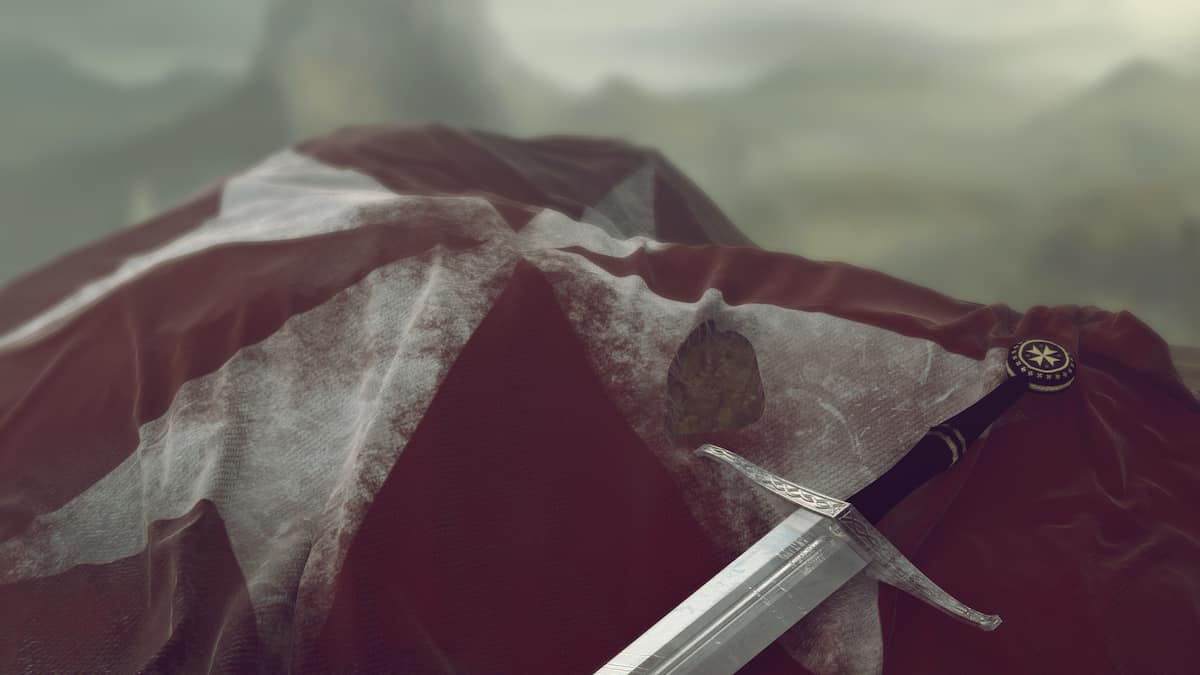
The height of high-medieval swordsmithing was the Crusader or Templar sword. This was a call-back to the early forms of the Roman spatha: a long, heavy blade with parallel edges. It gained its eponym from the Knights Templar, whose red-cross-wearing elite knights formed the vanguard of a sort of medieval multinational corporation, with interests in landholding, military expeditions, banking and healthcare. Rather than being diamond-shaped in cross-section, the ‘Templar’ sword was lens-shaped, meaning that it consisted simply of more steel and had even more power behind each swing. The tip was ‘spatulate’ or rounded; it would have been no use at all for thrusting, but that wasn’t the point. It was wielded by Crusaders: wealthy nobles who were quite literally giants on the battlefield. We forget that the staggering inequality in the Middle Ages would have meant that the wealthy would be the only ones getting enough to eat, and would therefore be inches taller than their subjects, and their low-born enemies. The Templar sword was designed for scything through lightly armoured enemies with each swing – it belies the brutality which often lay behind high-minded chivalric values.
As the medieval period progressed, the knightly arming sword became more of a sidearm, particularly with the development of plate armour in the 13th- and 14th-centuries, which could only be bypassed by heavy crushing weaponry. In response to this, the knightly sword was developed into the estoc: an extremely slender sword with unsharpened sides but a razor-sharp point, a giant needle for seeking out the vulnerable joints of a plate-wearing opponent.
Longswords 337
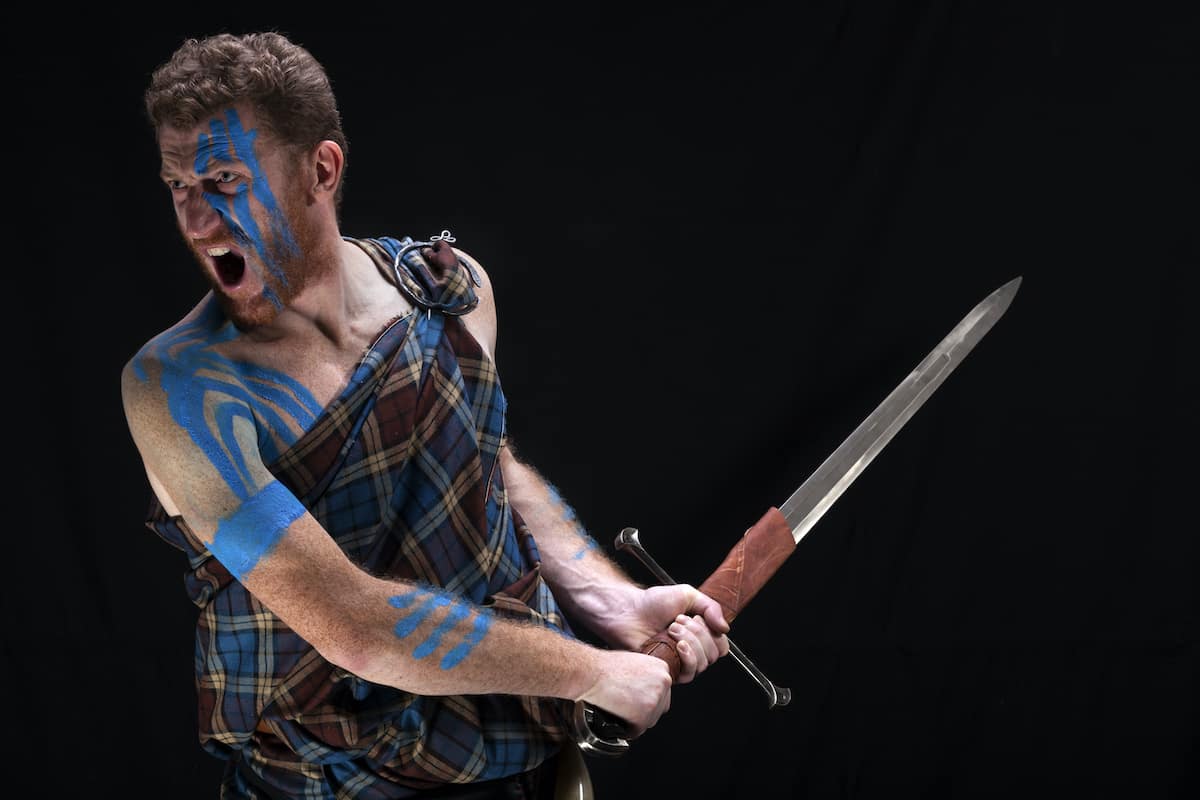
Developing parallel to the knightly sword was the longsword. These were, quite simply, longer swords with grips long enough to accommodate both hands – and often constructed slightly differently to permit ease of use. They first appear in the 12th-century as a means of bursting the improved mail of the period, but they saw much more widespread use from the 14th-century onward as plate armour became more widespread, and the less-insane soldier was more likely to forsake the additional protection afforded by a shield. They were known in the period as grans espées d'Allemagne, or ‘big German swords’ (stop it). As the construction of medieval sword design became more refined, more outrageous longsword designs begin to appear: bent quillons (cross-guards) to replicate the hook of a halberd, absurd flamberges with wavy blades, oversized ring-guards to protect the hand when going toe-to-toe with another silly-sword wielder. The apogee of the longsword is the Zweihander, a true beast of a weapon fully seven feet in length, wielded by extravagantly-dressed German mercenaries of the late-medieval period called Landsknechte. These swords had a long ricasso (unsharpened length of blade at the hilt) which meant that the Zweihander could be wielded like a polearm, and it was so large that it would be carried over the shoulder rather than sheathed when not in use. The bravest/stupidest/drunkest of the Landsknechte were employed as Doppelsöldner: literally ‘double-pay soldiers’, who stood out in front of allied troops and took on ranks of pikemen single-handed. In the Low Countries, the longsword has a curiously peasant association due to its use by the late-medieval rebel leader Pier Gerlofs Donia (1480 - 1520), known as Grutte Pier (‘Big Pier’), whose absolutely absurd longsword is now at the Fries Museum in Leeuwarden, Netherlands.
Whilst the adjective ‘bastard’ is supposed to denoted an intermediate length between arming sword and longsword, also known as ‘hand-and-a-half’, many modern replica medieval swords of longsword length seem to end up described as ‘bastard swords’. Partly because it sounds cool, but also because it’s a chance to say ‘bastard’ without getting told off.
Historical Swords
It seems intuitively likely that people would name their medieval swords. Presumably, these were objects of immense personal significance, often having being given or inherited, and associated with life-or-death encounters or moments of feudal symbology. However, like most medieval history, the lives of ordinary people are obscure to us, and it is the lives of the nobility from whom we can draw the clearest conclusions. There are a handful of named historical medieval swords that we can chart with some degree of certainty – but they will almost all be based upon historical sleuthing and educated guesswork.
The 11th-century Castillian warlord El Cid Campeador, a Spanish national hero and key figure of the Reconquista campaigns to break Spain away from Moorish Arab control, had two swords named in the epic poems written after his death: Tizona and Colada. A sword purporting to be Tizona is held by the selfsame sword is displayed by the Museum of Burgos in Castile and Leon. The sword first appears in the historical record in the possession of Álvaro de Luna, 1st Duke of Trujillo in 1452 (about 400 years after El Cid), and comprises of a long blade of 11th-century type – but it has an elaborate gold hilt of the style contemporary with when it came into the possession of de Luna. It is inscribed with the word ‘TIZONA’ along the fuller of the blade –but the earliest epic poems about El Cid name this sword as Tizón, ‘firebrand’. Not looking great. But a 1999 spectroscopic analysis conclusively proved that the blade of the sword had precisely the same patterns of impurity as those produced in workshops in the Córdoba Caliphate in the 11th-century, and contained South Indian Damascus steel – an incontrovertible fingerprint matching the time and place of El Cid. So – a four-century-old blade rediscovered in the 15th-century, attached to a glorious hilt, and inscribed with the contemporary name for Tizón… Is this La Tizona? It is likely we’ll never know for certain!
A less historically supportable medieval sword is that of Durendal, the sword of Roland, one of 9th-century Frankish king Charlemagne’s generals. Roland was a real figure: he is identified in contemporary writer Einhard’s Life of Charlemagne as the military governor of the Breton March, who was taken prisoner and massacred by Basques after the Battle of Ronceveaux Pass. But later high-medieval literature ‘did a King Arthur’ on him, and turned him and his travails at Charlemagne’s court into a literary epic. And every good tragic hero needs a super-cool sword – Durendal fits the bill, having been made by Hector of Troy, being able to cut through boulders at a blow, being indestructable, the usual. There is a sword which was long claimed to be Durendal – a rusted blade and hilt protruding from a fissure in the rock overhanging the spectacular monastery at Rocamadour. However, the local tourist office has (rather sadly) begun referring to this blade as a ‘replica’ of the obviously-very-real sword. But fortunately, modern swordsmiths have been inspired to create all sorts of fantastical replicas of the probably-mythical Durendal.
Fantasy Swords 375
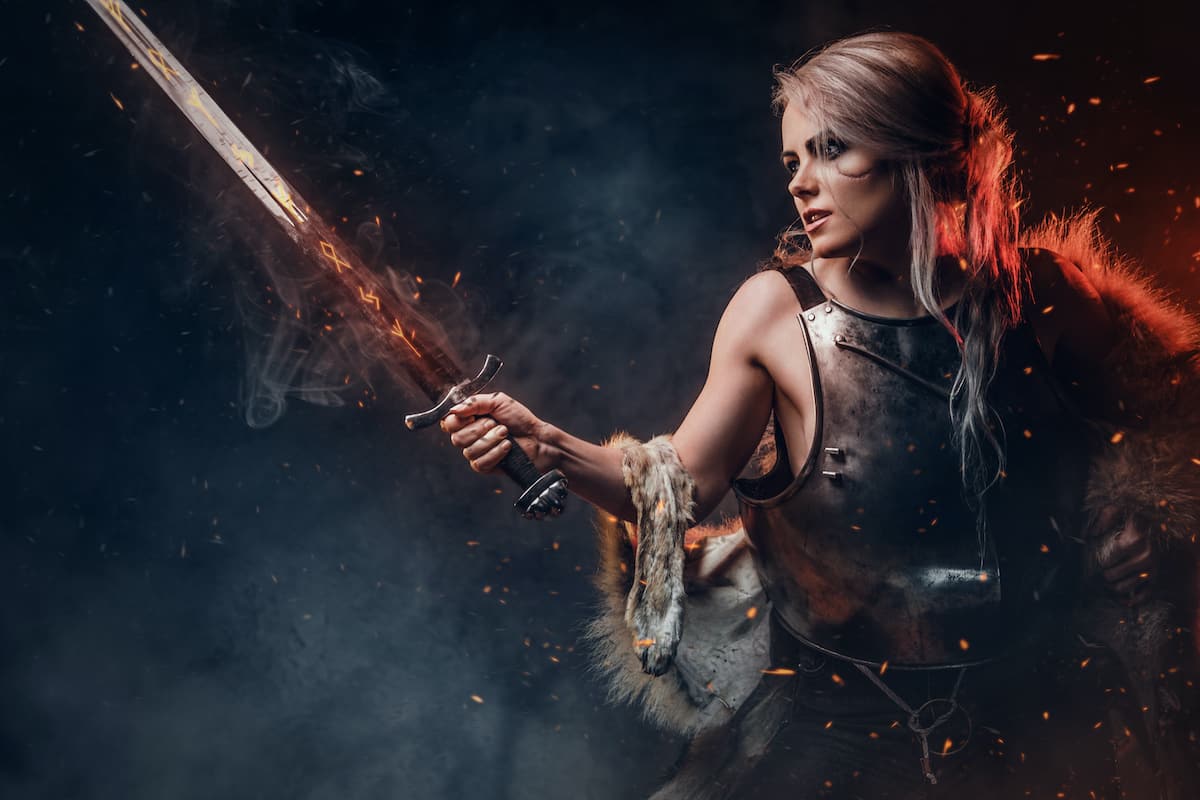
Historically inspired swords are obviously far too irresistible not to include in fantasy. GRR Martin’s A Song of Ice and Fire includes Valyrian steel swords – inspired by real medieval swords made from ‘Damascus steel’ – such as the Stark’s Ice and Jaime Lannister’s Oathkeeper. Some have magical powers of their own, such as Bilbo Baggin’s blade Sting in Tolkein’s The Hobbit and The Lord of The Rings glowing a cold blue when orcs are near. Elvish swords, such as Arwen’s sabre Hadhafang, are clearly inspired by single-edged Greek falcata.
Andrzej Sapkowski’s series of Witcher novels have come to widespread attention with The Witcher III console RPG, as well as a TV series. Geralt of Rivia, the show’s eponymous Witcher, has a utilitarian and unsentimental relationship with his weapons: that of a craftsman with his tools. Geralt’s workaday sword is a bastard sword inspired by brutally effective high-medieval arming swords – brutal, slender tapering edges, and a long point. However, Geralt’s secondary sword is highly unusual: a sword made from silver to combat the vampyrs and bruxas of his trade. Realistically, a sword made from silver would be extremely impractical – it would be soft enough as to be easily bent, and would not hold an edge. But it is the weapon most feared by the monsters he hunts, and a trademark weapon of his profession.
Swordpoint to Pommel
Swords hold a position unique in the list of medieval weaponry: they are easily the most recognisable of medieval weapons, as well as the most varied, but they remain the most enigmatic. Modern investigative techniques are beginning to unlock the metallurgical secrets slumbering within the examples which remain to us, but, frustratingly, the medieval period was so long ago! We have attempted here to reconstruct a history of the sword, and you can now navigate the lists of medieval swords with more confidence – keep in mind the kind of society your own historical medieval impression or LARP outfit is from, and how your choice of sword places you in relation to it.